
A magnetic level gauge (MLG), also known as a magnetic level indicator, is a reliable mechanical liquid level measurement device widely used in chemical, oil & gas, power, pharmaceutical, and water treatment industries.
Unlike differential pressure level transmitters or radar level meters, magnetic level gauges measure liquid level through a magnetic coupling principle, providing direct visual indication without external power supply.
1. Working Principle – Magnetic Coupling Design Without Process Interference
The core technology of a magnetic level gauge is the magnetic coupling between the internal float and external display indicator.
Inside the measuring chamber, a magnetic float moves according to the liquid level change. The magnetic field generated by the float passes through the chamber wall and drives the external bi-color indicator.
The operating principle is:
Liquid level changes → Float moves → Magnetic field transfers movement → External indicator changes position
This design completely separates the display mechanism from the process medium.
Key advantages:
Excellent Resistance to Process Conditions
Compared with other level measurement technologies, magnetic level gauges are less affected by:
- Changes in liquid dielectric constant
- Steam or vapor interference
- Foam generation
- High viscosity liquids
- Corrosive process media
Because the measurement is based on buoyancy and magnetic transmission, it provides stable level indication even under challenging industrial conditions.
Clear Local Level Display
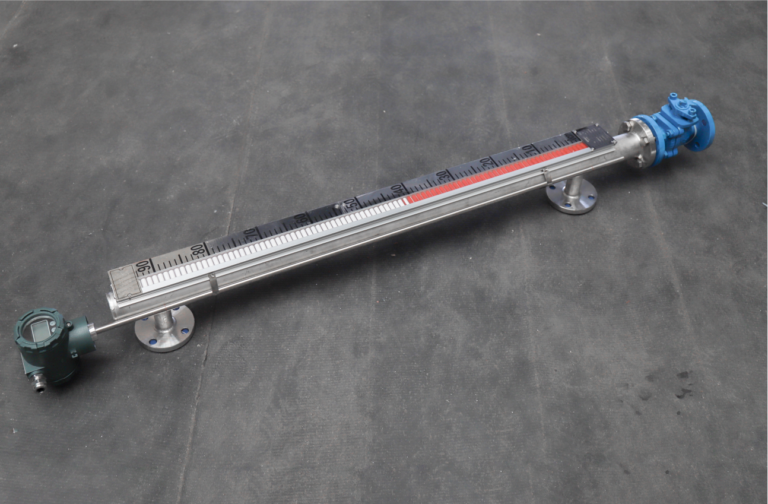
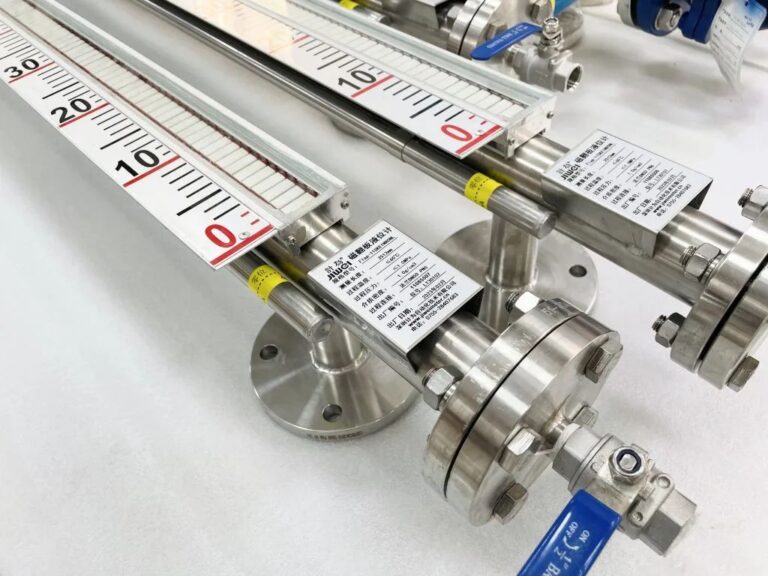
The external magnetic indicator usually uses a red/white or red/green bi-color display system.
Operators can quickly identify the liquid level position from a distance:
- Red area: Liquid level
- White area: Gas phase
No calculation, calibration, or power supply is required for local indication.

2. Mechanical Design – Fully Sealed Structure for Industrial Safety
For demanding applications in industries such as chemical processing, petroleum, and energy, magnetic level gauges are designed with a robust sealed structure.
Leak-Free Measurement Chamber
The process liquid remains completely inside the sealed measuring chamber.
Depending on the application requirements, the connection design may include:
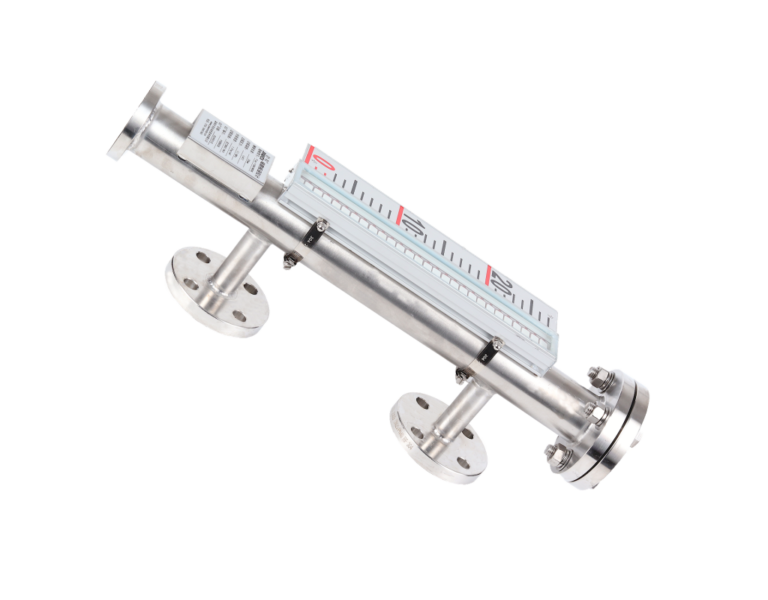
- Flanged connections
- Threaded connections
- Welded construction
- Sealed process joints
This makes magnetic level gauges suitable for measuring:
- Toxic liquids
- Flammable liquids
- Corrosive chemicals
- High-pressure process fluids
while reducing the risk of direct exposure to operators.
Durable Materials for Harsh Environments
Typical wetted materials include:
- Stainless steel 304
- Stainless steel 316L
- PP / PVC
- PTFE-lined materials
The proper material selection allows reliable operation in applications involving:
- Strong acids
- Alkalis
- Outdoor installation
- Corrosive environments
3. Application Advantages – A Reliable Zero-Power Level Measurement Solution
One of the biggest advantages of magnetic level gauges is that they operate without external power supply.
No External Power Consumption
Unlike electronic level instruments, magnetic level gauges work through mechanical movement:
- No power supply required
- No electrical signal failure
- Suitable for remote or hazardous areas
- Reduced installation and maintenance costs
Even during a power outage, operators can still check the liquid level locally.
Simple Installation and Low Maintenance
Magnetic level gauges support different installation methods, including:
- Side-mounted installation
- Top-mounted installation
Routine maintenance is simple:
- Clean the external indicator window
- Check drain and vent valves
- Verify float movement if required
No complicated calibration procedures are normally required.
Technical Feature Comparison
| Feature | Magnetic Level Gauge | Traditional Glass Tube Level Gauge |
|---|---|---|
| Measuring Principle | Magnetic coupling with float | Direct visual observation |
| Power Requirement | No external power required | No external power required |
| Safety | Sealed process chamber, optional explosion-proof configuration | Risk of glass breakage and leakage |
| Visibility | Bi-color indicator, easy remote viewing | Requires close observation |
| Process Compatibility | Suitable for high pressure, high temperature and corrosive liquids | Limited by glass tube strength |
| Maintenance | Low maintenance design | More frequent inspection required |
Advanced Solutions – Local Display Combined with Remote Transmission
Modern magnetic level gauges can be upgraded with additional sensors to provide both local indication and remote monitoring.
By installing:
- Reed switch level transmitters
- Magnetostrictive level sensors
the magnetic level gauge can provide standard output signals such as:
- 4-20 mA
- RS485 / Modbus communication
This allows connection to:
- PLC systems
- DCS control systems
- Industrial IoT platforms
The combination of mechanical reliability + digital communication makes magnetic level gauges an ideal solution for industrial level monitoring and plant modernization projects.
Conclusion
With its simple operating principle, reliable mechanical structure, excellent process compatibility, and zero-power operation, the magnetic level gauge remains one of the most trusted liquid level measurement solutions in industrial applications.
For applications requiring safe, visible, and reliable level monitoring, magnetic level gauges provide a practical alternative to more complex electronic instruments.