
Introduction
Orifice plates and flow nozzles are two widely used primary elements in differential pressure (DP) flow measurement systems.
Although both devices work based on the same principle — creating a pressure difference by restricting fluid flow — many engineers still face difficulties when selecting the right solution for a specific application.
Should you choose an orifice plate because of its lower cost?
Or is a flow nozzle a better choice for accuracy, durability, and energy efficiency?
In this article, we will compare orifice plates and flow nozzles from six important aspects:
- Structure and geometry
- Pressure loss characteristics
- Accuracy and turndown ratio
- Wear resistance and service life
- Cost
- Typical applications
This guide will help you select the most suitable differential pressure flow measurement solution for your process.
1. Structure and Geometric Design
Orifice Plate
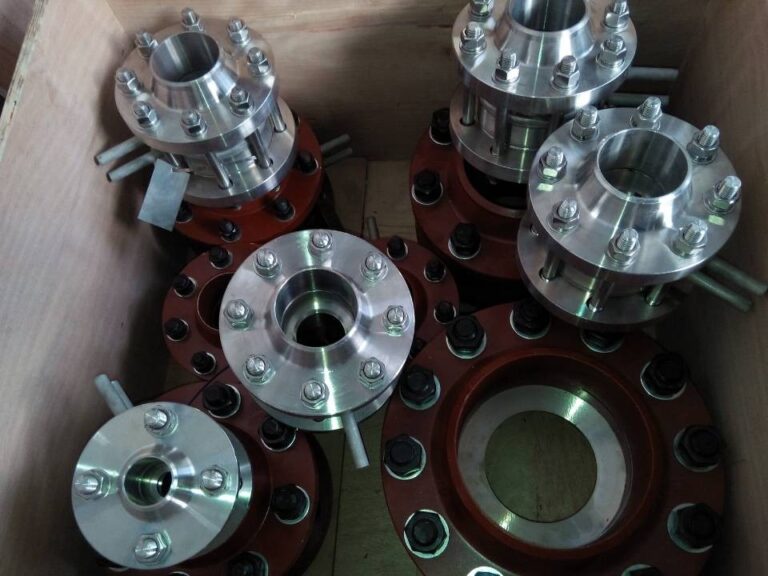
An orifice plate is the simplest and most commonly used differential pressure flow element.
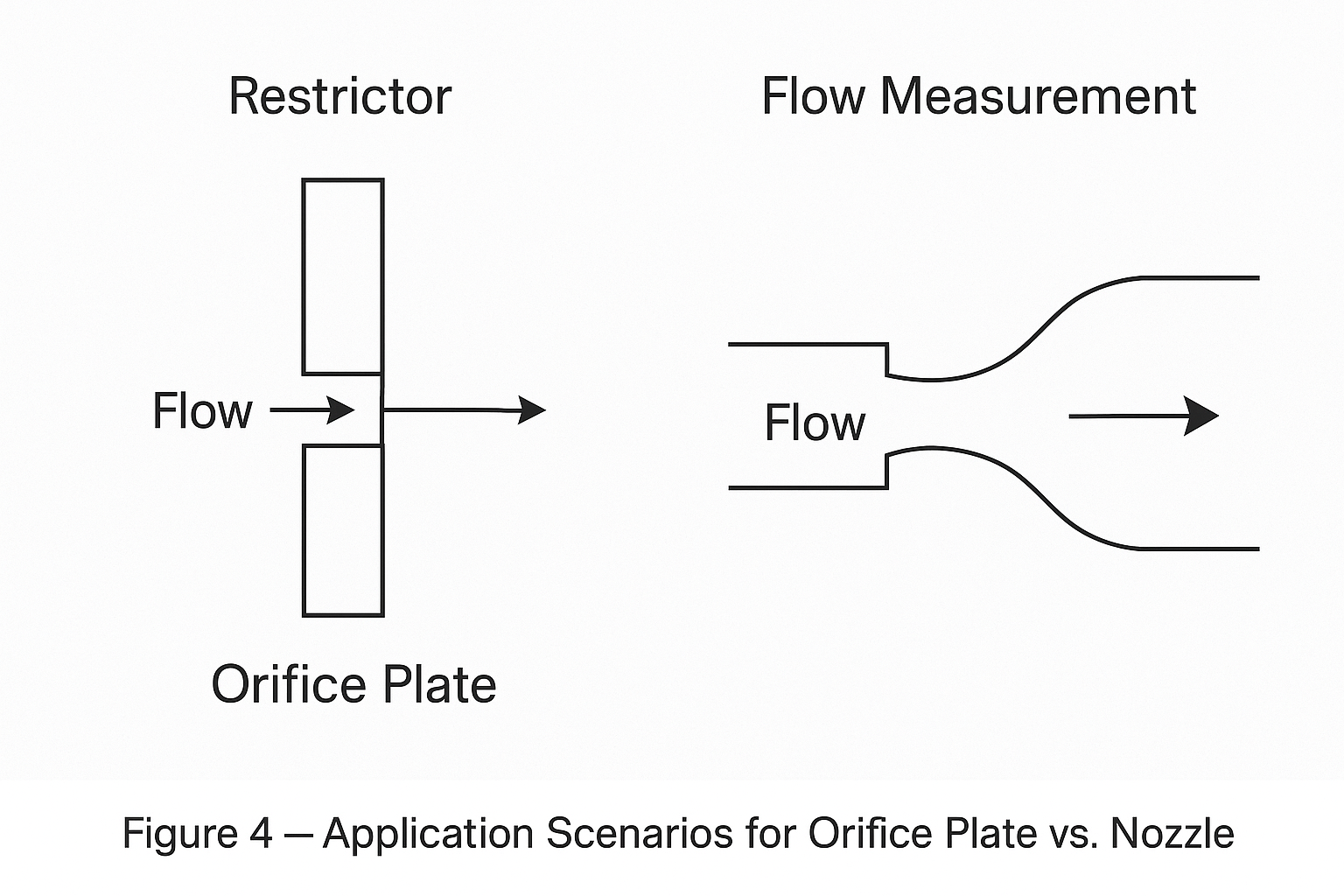
It is a thin metal plate with a precisely machined circular opening in the center. The inlet edge of the opening is sharp, creating a sudden contraction when fluid passes through.
The flow accelerates through the opening and forms a vena contracta downstream, where the minimum flow area occurs.
Advantages of Orifice Plate Structure:
- Simple design
- Easy manufacturing
- Low initial cost
- Widely standardized according to ISO 5167
Flow Nozzle
A flow nozzle has a more streamlined design compared with an orifice plate.
Its inlet section uses a smooth curved profile that gradually reduces the flow area before reaching the throat section.
Instead of a sudden contraction, the fluid experiences a controlled and gradual acceleration.
Advantages of Flow Nozzle Structure:
- Smoother flow transition
- Lower turbulence
- Better resistance to erosion
- Suitable for high velocity and high temperature applications
Selection Guide
For clean fluids and cost-sensitive projects, an orifice plate is usually the economical choice.
For applications involving high velocity, steam, or fluids with potential erosion problems, a flow nozzle provides better long-term performance.
2. Pressure Loss and Energy Efficiency
Orifice Plate
Because the flow suddenly contracts and expands through the sharp-edged opening, strong turbulence and vortices are generated downstream.
A significant part of the differential pressure becomes permanent pressure loss.
The recovered pressure is relatively low, which means additional pumping or compression energy may be required.
Flow Nozzle
The streamlined design of a flow nozzle allows smoother acceleration and reduces turbulence.
Compared with an orifice plate, the permanent pressure loss is significantly lower, and more pressure energy can be recovered.
Benefits:
- Lower operating energy consumption
- Reduced pump or compressor load
- Better choice for continuous high-flow applications
Selection Guide
For large steam flow measurement systems, power plants, and energy-sensitive applications, flow nozzles are often preferred because of their lower permanent pressure loss.
For applications where pressure loss is not a major concern, an orifice plate remains a practical and economical solution.

3. Accuracy and Turndown Ratio
Orifice Plate
The accuracy of an orifice plate depends strongly on the condition of the sharp inlet edge.
Over time, erosion, corrosion, or deposits can change the geometry and affect the discharge coefficient.
Typical characteristics:
- Accuracy: approximately ±1% to ±2%
- Turndown ratio: around 3:1 to 4:1
- More sensitive to upstream flow disturbance
Longer straight pipe sections are usually required to ensure stable measurement.
Flow Nozzle
A flow nozzle provides a more stable flow coefficient because of its smooth inlet profile.
It is less affected by edge wear and can maintain better accuracy over long operating periods.
Typical characteristics:
- Higher measurement stability
- Turndown ratio: approximately 4:1 to 5:1
- Better performance under lower Reynolds number conditions
Selection Guide
Choose a flow nozzle when:
- Higher accuracy is required
- Measurement stability is important
- Straight pipe installation space is limited
Choose an orifice plate when:
- Standard measurement accuracy is sufficient
- Initial investment is the main concern
4. Wear Resistance and Corrosion Resistance
Orifice Plate
The sharp edge of an orifice plate is its most important feature, but also its weakness.
High velocity flow, solid particles, or corrosive media can gradually damage the edge.
Possible problems:
- Flow coefficient changes
- Measurement deviation increases
- More frequent inspection may be required
Flow Nozzle
The smooth curved inlet design provides better resistance against erosion and corrosion.
The streamlined profile reduces dead zones where deposits may accumulate.
Advantages:
- Longer service life
- Better performance with high velocity fluids
- Improved resistance to fouling
Selection Guide
For clean water, air, and general industrial applications, an orifice plate is usually sufficient.
For steam, high velocity gas, abrasive fluids, or applications with deposits, a flow nozzle is generally a better choice.
5. Cost Comparison
Orifice Plate
The biggest advantage of an orifice plate is cost.
Benefits:
- Simple manufacturing process
- Easy installation
- Low replacement cost
- Large availability worldwide
Flow Nozzle
A flow nozzle requires more precise machining, especially for:
- Curved inlet profile
- Throat dimensions
- Surface finish requirements
Therefore, the initial purchase cost is higher than an orifice plate.
However, lower pressure loss and longer service life may reduce total operating costs.
Selection Guide
Choose an orifice plate when:
- Budget is limited
- The medium is clean
- Pressure loss is acceptable
Choose a flow nozzle when:
- Energy saving is important
- The system operates continuously
- Long-term reliability is required
6. Typical Applications
Typical Applications of Orifice Plates
Orifice plates are widely used in:
- Water measurement
- Air and gas measurement
- General industrial process measurement
- Large pipeline applications
They are suitable for:
- Clean fluids
- Cost-sensitive projects
- Applications where permanent pressure loss is acceptable
Orifice plates are commonly designed according to standards such as:
- ISO 5167
- ASME MFC-3M
Typical Applications of Flow Nozzles
Flow nozzles are commonly used in:
- Steam flow measurement
- Power generation systems
- High temperature and high pressure processes
- High velocity gas measurement
Typical applications include:
- Boiler steam measurement
- Superheated steam systems
- Energy monitoring systems
- Applications requiring lower pressure loss
Orifice Plate vs Flow Nozzle Comparison Table
| Feature | Orifice Plate | Flow Nozzle |
|---|---|---|
| Structure | Simple sharp-edged plate | Streamlined curved inlet design |
| Flow contraction | Sudden contraction | Gradual contraction |
| Pressure loss | Higher | Lower |
| Accuracy | Moderate | Higher |
| Turndown ratio | 3:1–4:1 | 4:1–5:1 |
| Wear resistance | Moderate | Better |
| Maintenance | More frequent inspection | Longer service life |
| Cost | Lower | Higher |
| Best application | Clean fluids, cost-sensitive projects | Steam, high pressure, energy-saving applications |
How to Choose Between Orifice Plate and Flow Nozzle?
Selecting the right differential pressure flow element should not simply depend on price.
Consider the following factors:
- Medium characteristics
- Liquid, gas, steam
- Clean or containing particles
- Operating conditions
- Pressure
- Temperature
- Flow range
- Measurement requirements
- Accuracy
- Turndown ratio
- Stability
- Installation conditions
- Available straight pipe length
- Maintenance requirements
- Operating cost
- Pressure loss
- Energy consumption

Conclusion
An orifice plate is a reliable and economical solution for many standard flow measurement applications.
A flow nozzle provides better performance when accuracy, durability, and energy efficiency are more important.
In simple terms:
Orifice Plate = Lower cost + Simple design + Wide application
Flow Nozzle = Lower pressure loss + Higher stability + Better for demanding conditions
The best choice is not always the most expensive one — it is the one that matches your actual process requirements.
Need Help Selecting a Differential Pressure Flow Meter?
Our engineers can help you select the right solution based on:
- Medium type
- Flow range
- Pressure and temperature
- Accuracy requirements
- Installation conditions
Contact us for a customized differential pressure flow measurement solution.